North Carolina’s coast is not the same as it once was. The popular yellow sand beaches have been damaged and shortened over time due to erosion. Diminishing at an annual rate of 7 feet per year (Riggs, et al. 2011), the near future for these beloved barrier islands is not looking promising. Whilst natural geological factors can be held accountable for this, their decline is largely a result of human impact.
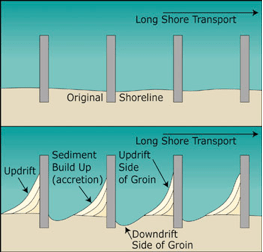
Many residents of shoreline communities enjoy the benefits of being immersed in coastal settings, especially in the summer. However, they may not realize that living on or near the coastline actually increases levels of erosion. Erosion only becomes a problem when buildings and roads are being threatened. It is the very nature of barrier islands to shift and evolve, but when methods are put in place to prevent this, an issue begins to arise. Local communities install hard structures such as terminal groins (see fig. 1) to hold the beach in place and protect the property behind it. Whilst this seems like a good solution, the benefits are only short term. In order to protect properties, the groins cause a buildup of sand that should have been dispersed further down the coast. Those areas are cut off from natural longshore drift and in turn enhances erosion.
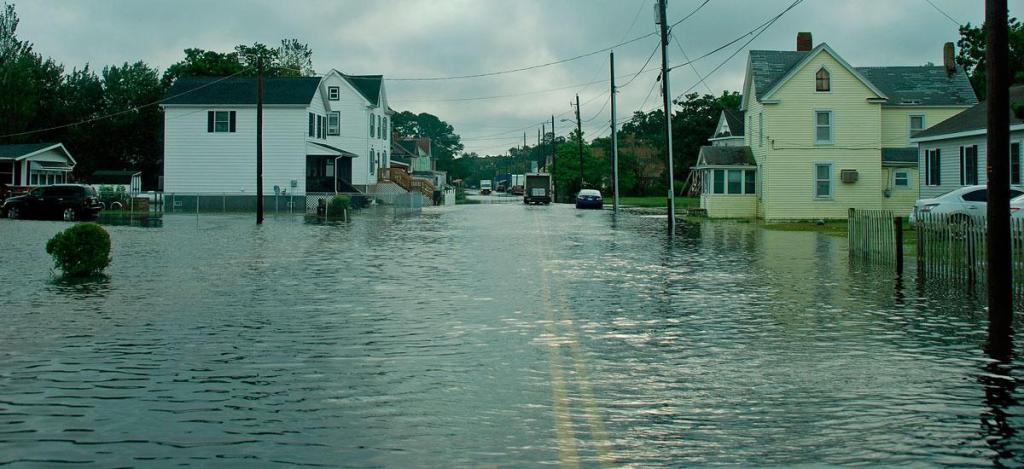
Another and perhaps more obvious human derived influencer of erosion is rising sea levels. As global temperatures increase, sea levels rise. This rise affects coastal regions as this greater volume of water reaches further up the beach and redistributes sand (Leatherman et al. 2000). Coastal communities all have a threshold for sea level rise, having a point where sustaining normal routines becomes impossible. By 2035, the US will have 100 communities with a quarter of their land chronically flooded, and 70+ more will face chronic engulfing and possible evacuation (Dahl, et al. 2017). This is just one example of a statistic that reflects the pessimistic future of coastal communities, which will serve as an issue for North Carolina’s beautiful barrier islands.
 North Carolina's Erosion